Showing posts with label geology. Show all posts

Friday, October 2, 2020

Prediction: Venusian Phosphine is a Metabolic Product of Living Cells Already Detected As Unknown Absorbers

(Added later: since I wrote this, further research has provided evidence showing it is very unlikely that the unknown absorbers are biological. Not only was the phosphine paper a product of bad spectrometry that failed multiple attempts at replication, there are at least two papers - Jiang et al 2024, and Egan et al 2025 - that have provided good candidate abiotic explanations for what the absorbers could be.)

The last two years have provided us with the strongest evidence ever assembled of extraterrestrial life:

  1. Prior theories about relic ecosystems surviving in the more Earth-like parts of Venus's atmosphere.
  2. Detection of UV absorbers the size of bacteria in Venus's atmosphere, with no explanation as to their identity.
  3. Prior, independent advancement of phosphine as a biosignature gas.
  4. Detection of phosphine in the Venusian cloud decks with no explanation for its persistence.

Here I propose that Venus had an iron-sulfur ecosystem with a chlorophyll-equivalent that absorbs closer to the UV spectrum rather than visible light - essentially, "UV-synthetic" Venusian cyanobacteria. The oceans boiled away and Venus became hotter and more acidic from volcanism and possibly, their own Great Sulfuration (or Sulfur Oxidation, equivalent to Earth's Great Oxygenation.) The only survivors were the UV-synthetic Venusian archaebacteria that now live in the upper atmosphere. Today these have a life cycle like that described by Seager et al (2020), powered by UV and producing phosphine - Unknown Absorber Phosphine Producers (UAPPs.) They are likely related at great time depths to life on Earth. Initial research question is to see if areas of unknown absorbers correlates with phosphine, which can be done from Earth. Probes that collect material in the upper atmosphere could fairly straightforwardly check for aspects of biochemistry using an onboard instrument, and a sample return mission could be extremely productive.


Phosphine Production in the Clouds of Venus

If you're reading this you likely know that phosphine (PH3) was detected in the atmosphere of Venus - Vox explainer here; original paper by Greaves et al here. The measured concentrations are at biology-consistent levels, at an elevation where the pressure and temperature are similar to Earth's. This is by far the strongest evidence of extraterrestrial life yet discovered, with evidence from multiple sources.

Phosphine has been advanced as a possible seed compound delivered to Earth on comets or asteroids early in its history. But the chemistry of its formation in space (or on gas giants) is not mysterious. It's in the Venusian atmosphere where so far we can't explain its presence without some process that continuously replenishes it. One criticism of speculation about possible Venusian biochemistry is that just because we don't know how to make phosphine under Venusian conditions, doesn't mean we're looking at alien biology. True; but among these criticisms have not been any suggestions so far about what it might be. (Either way, we're about to learn something.) It's suggestive that this data is not completely unexpected - it can be fitted to prior hypotheses. We've been speculating more and more concretely for decades about how life might survive in the atmosphere of Venus for decades (see Morowitz and Sagan 1967.) A fairly elaborated model of microbial life in the atmosphere of Venus was advanced recently by Seager et al, consistent with observations so far. This should also increase our confidence in the Venusian-cloud-life hypothesis, that even before phosphine was detected, Sousa-Silva et al suggested phosphine as a biosignature molecule, independent of finding it on Venus.


A Related Mystery? The Unknown Absorbers


In visible light and false-color UV absorption. It's unusual to have such contrast in absorption at different wavelengths. Image credit syfy.com


For decades we have known that there are partciles about 10^-6 meters (the size of bacteria) in the Venusian atmosphere at a similar altitude (at 47 to 64km) as the phosphine detection above (at 57km and above). The dark bands we can see with the naked eye in the Venusian atmosphere contain more of them, but as you can see above in the UV image, they are much higher contrast (more absorbant). As with the origin of Venusian phosphine, the identity of the absorbers remains controversial, and Venusian biology had been advanced previously as a candidate explanation (Limaye et al 2018). The phosophine paper points out that there is more phosphine at mid-latitudes than the equator or poles, which by naked-eye examination of images of Venus, seems also to be where the absorbers are. It seems a relatively straightforward study to correlate the two, but as the absorbers move on a scale from minutes to days, data would have to be collected simultaneously. The stronger the correlation (especially within the same latitude) the more our confidence in the UAPP hypothesis of Venus cloud life would be increased.


What About Bacterial Life in Earth's Cloud Decks?

Earth's clouds do indeed contain lots of bacteria, and not just incidentally - some of them clearly evolved to take advantage of the precipitation cycle and indeed to deliberately cause ice to enucleate around it, like Pseudomonas syringae (this is actually economically relevant as the water ice-enucleation proteins produced by this species is used in the water fed into snow guns at ski resorts.) Bacteria have been found all the way up to 28 miles above the surface, where the pressure and temperature are both much lower and considerably less hospitable even to Earth's own life than the cloud decks on Venus. While we can't say there is an actual bacterial ecosystem in Earth's clouds (one which persists without interacting with the surface), we haven't really looked for one either; most of our interest in these organisms thusfar comes from studying plant pathogens that spread through weather events. It's worth pointing out that there is phosphine in Earth's upper atmosphere as well, with no clear mechanism for how it forms there. It should be noted that there is less in Earth's upper atmosphere by about 3 orders of magnitude; the levels in Venus's atmosphere are more similar to that found immediately around actively metabolizing bacteria on Earth's surface.


Toward an Evolutionary History of Venus

Why would life exist on the most hellish world in the solar system? The answer is that for at least 75% of its lifespan, Venus was a much more Earth-like planet with cooler temperatures and oceans.

There are two possible, not mutually exclusive stories that explain how this planet came to be the Venus we know today.

The first is that Venus was a little too close to the Sun, which caused its oceans to evaporate, plate tectonics to cease, and subsequent cataclysmic volcanism. As the oceans evaporated, the water vapor trapped the heat and accelerated the process. The deuterium/hydrogen ratio on Venus is about 150 times higher than Earth, where comets have at most a 3 times higher ratio than Earth, suggesting a very gradual loss to space of hydrogen from water and preferential retention of the heavier nucleus. Water lubricates plate tectonics, per Solomatov 2001. Climate modeling suggests that Venus may have had a habitable climate with liquid water at the surface until 715 MA ago (Way et al 2016.) The subsequenct evaporation of the oceans resulted in a planet where plate tectonics ground to a halt, and with no crustal mechanism to dissipate heat, and finally between 700 and 500 MA ago, Venus erupted in planet-wide massive flows that resurfaced the planet, utterly dwarfing any similar events on Earth (like the Siberian Traps.) This released the massive amounts of sulfur that we see today. This is the received wisdom and could entirely explain the modern state of Venus, and may alone be enough to explain all the sulfur.

There is another version of the story which reverses the causality - eruption causing evaporation, advanced by Way and Del Genio in 2019. It's worth noting that Venus has a thicker crust than Earth, owing to its lack of a large moon; therefore we should expect that the flows, when they do finally cause the crust to fail, are much stronger than in the parallel situation on an evaporated Earth.

The second possibility is obviously more speculative, a parallel to the Great Oxygenation in the history of life on Earth. In Earth's history, anaerobic cyanobacteria produced so much oxygen that they effectively poisoned themselves, but also set the stage for aerobic life. This could have been a great coincidence - there may just have happened to be genes close enough in design space to assemble oxyidation defenses and an aerobic metabolic pathway, and without such a coincidence, that may have been the end of life on Earth, or it may have settled into a simple bloom-and-bust oscillation as our bacterial mats may have for hundreds of millions of years evidenced by banded iron formations found in ancient rocks where they persist at the surface. (See discussion of endogenous extinctions here, which this section partly recapitulates.)

While an interesting idea, by Occam's razor we should spend no further time considering a possible Great Sulfuration, as we can explain the death of the Venusian surface ecosystem entirely based on abiotic meteorological and geological processes as above. It's also the case that the presence of increased CO2 relative to Earth can be easily explained by abiotic processes as well. Using ingenious reasoning about the necessary atmospheric pressure for flying dinosaurs' wings to function as well as the known rates of deposition of CO2 as carbon in continents and the ocean, we can arrive a figure of the equivalent of 85-100 bars' worth of CO2 trapped in the Earth's crust, similar to what is currently in the Venusian atmosphere. Presumably the atmospheric pressure of Venus was lower during its oceanic period owing to the same process, and rose subsequent to the evaporation, but I am not aware of any modeling retrodicting from oceanic evaporation 500-700 MA ago to the current pressure and mass of CO2 on Venus.

All this is to say that life on Venus may have gone a different way, but started quite similarly. We're now fairly confident the first metabolism on Earth was sea vent iron sulfur organisms, using sulfur in what is now oxygen's chemical role. The Great Oxygenation may have only happened when it did, a full 1.5 billion years after the first life and at least 800 million years after photosynthesis appeared, because an asteroid delivered molybdenum, allowing nitrogen fixation and more efficient anaerobic metabolism. Whatever the reason, had this happened prior to photosynthesis, we may have ended up with an Earth poisoned with sulfur or at least with a massive amount of oxidized sulfur.


Two Obvious Problems for the "UAPP Cells" Hypothesis for Life on Venus

There are two major hurdles to overcome in any argument that there is life in the cloudtops of Venus. The first is the question of how life operates without water, or with very little water; this would actually be a more stunning find than merely life which can tolerate high acidity! The second is the failure thusfar to detect any organics in the atmosphere. Without water and organic molecules, it's very hard to see how this won't end up being an interesting abiotic route to phosphine production along with some crystal we weren't anticipating at that altitude. That said, organic compounds on Venus may not be as unlikely as one might think - there was a Venusian equivalent of the Miller-Urey experiment performed, where under conditions of the Venusian atmosphere, organic compounds including amino acids were produced.

Furthermore, there remain arguments for an abiotic explanation for the unknown absorbers, specifically ferric chloride (Petrova 2018). Interestingly, this is partly advanced to explain another mystery which is the presence of rainbows ("Venus glory"), first observed in 2014 in the Venusian atmosphere.


Implications for Evolution in General and the Future of Life of Earth

It is more likely than not that life on Venus will be distantly related to life on Earth. A massive amount of material has been transferred between bodies in the solar system, with actual numbers calculated here; at that same link you will see reference to the survival of uncontrolled re-entry during the Columbia crash by not just bacteria, but animals (C. elegans worms, found alive on the ground weeks after the crash.) This is actually the more boring possibility, because we would learn much more about the basic principles of evolution and the possibilities of biochemistry beyond Earth's provincial commitments, if we really had a novel origin. Either way, if there is life on Venus, the likelihood of life on Mars, Europa, Enceladus and even Titan jumps dramatically, even if it's "just" a long-lost relative. I expect that ultimately the impact of finding life on Venus will be some neat new biochemistry (the old extremophiles will seem quaint) and a bit more information about how evolution can proceed.

It is unclear how we should feel about Venusian cloud UV-cyanobacteria in terms of the Great Filter, which suggests that the more life we find in the universe and the closer in terms of evolutionary stage to humans, the more concerned we should be - because the more likely our own extinction is before we can colonize planets beyond our own. If further exploration of Venus yields trilobites or vertebrates and these cells are all that are left, we should worry much more. In contrast, if Venus never got past vast floating bacterial mats (either in its clouds or ancient oceans). that's a bit more comfortable for us.


REFERENCES

Bains W, Petkowski J, Sousa-Silva C, Seager S. Trivalent phosphorus and phosphines as components of biochemistry in anoxic environments. Astrobiology 19, 7 (July 2019): p. 885-902 doi 10.1089/AST.2018.1958

Glindemann D, Edward M, Kuschk P. Phosphine gas in the upper troposphere. Atmospheric Environment Volume 37, Issue 18, June 2003, Pages 2429-2433

Greaves JS, Richards AMS, Bains W, Rimmer PB, Sagawa H, Clements DL, Seager S, Petkowski JJ, Sousa-Silva C, Ranjan S, Drabek-Maunder E, Fraser HJ, Cartwright A, Mueller-Wodarg I, Zhan Z, Friberg P, Coulson I, Lee E, Hoge J. Phosphine gas in the cloud decks of Venus. Published: 14 September 2020. Nature Astronomy (2020)

Levenspiel O, Fitzgerald TJ, Pettit D. Was the Atmospheric Pressure Different at the Time of Dinosaurs? Chemical Innovation, December 2000 Vol 30, No.12, 50 – 55

Limaye SS, Mogul R, Smith DJ, Ansari AH, Słowik GP, Vaishampayan P. Venus' Spectral Signatures and the Potential for Life in the Clouds. Astrobiology. 2018 Sep 1; 18(9): 1181–1198. Published online 2018 Sep 12. doi: 10.1089/ast.2017.1783

Morowitz H & Sagan C. Life in the Clouds of Venus? Nature volume 215, pages1259–1260(1967). 16 September 1967.

Otroshchenko V.A., Surkov Y.A. (1974) The Possibility of Organic Molecule Formation in the Venus Atmosphere. In: Oró J., Miller S.L., Ponnamperuma C., Young R.S. (eds) Cosmochemical Evolution and the Origins of Life. Springer, Dordrecht. https://doi.org/10.1007/978-94-010-2239-2_40

Petrova EV. Glory on Venus and selection among the unknown UV absorbers. Icarus Volume 306, 15 May 2018, Pages 163-170

Seager S, Petkowski JJ, Gao P, Bains W, Bryan NC, Ranjan S, Greaves J. The Venusian Lower Atmosphere Haze as a Depot for Desiccated Microbial Life: A Proposed Life Cycle for Persistence of the Venusian Aerial Biosphere. Astrobiology. Published Online:13 Aug 2020. https://doi.org/10.1089/ast.2020.2244

Sousa-Silva C, Seager S, Ranjan S, Petkowski JJ, Zhan Z, Hu R, Bains W. Phosphine as a Biosignature Gas in Exoplanet Atmospheres. AstrobiologyVol. 20, No. 2. Published Online:31 Jan 2020 https://doi.org/10.1089/ast.2018.1954

Way MJ, Del Genio AD, Kiang NY, Sohl LE, Grinspoon DH, Aleinov I, Kelley M, Clune T. Was Venus the First Habitable World of our Solar System? Geophysical Research Letters. First published: 11 August 2016 https://doi.org/10.1002/2016GL069790

Tuesday, February 4, 2020

The Singularity Will Be An Extinction Event, and an Endogenous One

There have been exogenous extinctions, ie not from an ecosystem's "internal contradictions." Examples are massive magma flows like the Central Atlantic Magmatic Province at the Triassic-Jurassic boundary, or the asteroid strike like the K/T Boundary. These were at least partly caused by out-of-context events that life on Earth did not influence. Then there are endogenous extinctions, which were caused entirely by the actions of the system itself, with no external disturbance. The best example is the Great Oxygenation Event, where the cyanobacteria inadvertently poisoned themselves, and paved the way for a whole new kind of metabolism. About every 26 million years, a superpredator develops and kills everythinghumans are filling this role currently – and even if there's not an extinction, there's a local minimum in biodiversity and ecological robustness.

Since we're the aerobic beneficiaries of the Great Oxygenation, we like to narrativize this in the form of a teleologic happy ending. That is: the story becomes, yes the cyanobacteria poisoned themselves, but it was to make way for the glory of oxygen-breathing life. That oxygen they fatally polluted themselves with turned out to be an improvement, a new fitness landscape. Any endogenous extinction clears the way for evolutionary progress!

This is false. Of course the Great Oxygenation Event turned out to be survivable, because we're here looking back on it. But choose any other model example of a closed ecosystem where the endogenous activity of the local organisms is rapidly changing their environment, and you are unlikely to find that the majority of them are success stories. Things poison themselves, and end up with no descendants that can survive. (There is no argument to exclude humans from this phenomenon. Both deforesting Easter Island and the ongoing Great Carbonization Event are good examples.)


Two implications follow:

1. The reason for the Great Silence (ie the Fermi paradox) could be that there are many watery worlds out there which evolve local cyanobacteria, but they have their own endogenous shocks, and these do not result in a survivable planet, or at least in a richer potential fitness landscape. As in Conway's Game of Life, if they're lucky they either settle into a simple oscillating system (bloom, mass extinction, bloom, same kind of mass extinction, ad infinitum) or the ecosystem collapses completely and ends.

Speculation regarding this: we're fairly confident the first metabolism on Earth was sea vent iron sulfur organisms, using sulfur in what is now oxygen's chemical role. The Great Oxygenation may have only happened when it did, a full 1.5 billion years after the first life and at least 800 million years after photosynthesis appeared, because an asteroid delivered molybdenum, allowing nitrogen fixation and more efficient anaerobic metabolism. Whatever the reason, had this happened prior to photosynthesis, we may have ended up with an Earth poisoned with sulfur or at least with a massive amount of oxidized sulfur.

In an interesting parallel observation: we're also confident that Venus was once a wetter, cooler world that had a runaway greenhouse effect. One of the mysteries of Venus is the origin of all the sulfur in its thick atmosphere; to a first approximation all sulfur on Earth's surface is assumed to be from volcanoes, but why so much more on Venus? Another mystery is the identity of the small UV absorbers (about the size of bacteria) that form the dark bands in its atmosphere; one idea is that they're cells descended from ancestors that evolved at the surface and now can only survive in the more benign lower temperatures and pressures of the high clouds. If indeed these are the survivors of a Great Sulfuration Event, while the event did not result in total extinction, it limited the Venusian ecosystem to oscillate on a barren fitness landscape, just from the bad luck of having richer crust contents or earlier impacts with potential-enzyme-cofactor-bearing asteroids that allowed more efficient iron-sulfur metabolism.

(Recent evidence however suggests a massive volcanic event 700 MA ago that resurfaced the planet after massive flows; this which may be enough to explain all the sulfur. A gradual boil off of water remains quite likely, for two reasons – the D/H ratio on Venus is about 150 times higher than Earth, where comets have at most a 3 times higher ratio than Earth, suggesting loss to space of hydrogen from water and preferential retention of the heavier nucleus; and that such a massive volcanic event could have been caused by the loss of water, and the cessation of plate tectonics which allow a cataclysmic buildup of heat. It's interesting that the Siberian trap flows and CAMP happened during a period on Earth when the continents were crammed together and perhaps less efficient at letting out volcanic heat, though these events were still nowhere near what happened on Venus.)

2. If a technological Singularity occurs, it would be an endogenous extinction. In this case we are the cyanobacteria, and our extrasomatic adaptations are the contradiction internal to the system, and the AIs are our oxygen-breathing descendants. Like them, we produced the conditions that destroyed us and paved the way for the next phase of life. It's true that cyanobacteria and anaerobic organisms persist but do not dominate the world as they did in the Archaean. Even if cellular life survives the Singularity, being relegated to the role of cyanobacteria is unappealing for most.

But then there is another possibility, in which the AIs drive themselves extinct too. Think of this as the super-pessimistic case. Singularity optimists think we can benefit from or at least co-exist with superintelligence (becoming the equivalent of cyanobacteria is actually optimistic in this scheme.) Singularity pessimists think the event will kill all biology. Here, I suggest the super-pessimist position, which is that the Singularity may kill us, then also itself, in the final, most spectacular ecocide of Earth's history. Why? One theory is that any self-improving superintelligences will necessarily disassemble matter, including whole planets, into atoms that can be used for computation. But there is no principle stating that intelligence must always exceed power; that is, that impact of behavior must grow more slowly than ability to predict impact of behavior. Certainly it didn't happen with cyanobacteria, and given the sluggishness of our response to global warming it might not be happening with humans. Even if the AIs are in fact superintelligences, they are still not omniscient. As they're disassembling everything, they may get to the end of a predictive computation and realize that part of the code has gone cancerous and is replicating out of control (and consuming matter in the process) and can't be called back, or they're going to run out of power before they get to the next planet or star system, or overheat, or whatever problem an AI might run into.

Therefore, if the Singularity does happen, it would be just one type of endogenous extinction. If in a hundred million years, aliens or their self-replicating probes visit the solar system (if such things ever occur in the history of the universe) they might find its dusty, partly-disassembled remains, and file the data under "ecosystems that ended with behavioral/artifactual singularities" and then move on. Interestingly, we have already found old planetary systems that are far dustier than we would expect, with no explanation for the inner dust ring and a some constant replenishment process. Even this assumes that the self-replicating alien probes can get there before becoming cancerous dead-ends themselves.

Tuesday, July 24, 2018

Look for RNA-World Rock Strata on the Moon

Schulze-Makuch and Crawford show in Astrobiology that that the Moon may have briefly been habitable - either (two options) about 4.5 billion years ago, or 3.5 billion years ago, for a few tens of millions of years, with an atmosphere and some liquid water (Gizmodo digest here.) Since the moon was formed after an impact with the early Earth, we should assume they had many of the same starting materials. The moon had less surface area and less time, and split from the Earth prior to even the earliest suggested prebiotic activity around 4 billion years ago, so it would have had to develop its own life - it could not have been "seeded."


The Moon with life (although terraformed.) From Techeblog.

Recent work by Tashiro et al suggest that a 4 billion year old rock stratum on Earth shows evidence of biological activity and may even be the fossil result of an RNA-World stage in the evolution of life on Earth. If it existed on Earth, it also could have existed on the Moon. It's not as though that rock stratum is exposed everywhere on Earth (the Tashiro people used samples from northern Labrador, Canada.) But it's interesting to think that the same stratum could have existed on the Moon if prebiotic chemistry took a similar course - and that those strata may be much easier to find and more widespread given the inactivity of the Moon relative to Earth.

Friday, September 29, 2017

Life's Origins at Four Billion Years Ago; Implications for Our Future

A group from the University of Tokyo (Tashiro et al, 2017) argues in a Nature paper that carbon isotope ratios in rocks in northern Labrador, Canada means that those rocks harbored life almost four billion years ago. This pushes back the early bound on origin of life almost two hundred million years, almost to the Hadean eon. To be sure this finding has not been universally accepted, but it's worth thinking about what it would mean. In particular, and perhaps not coincidentally, this is also right about when the Earth's surface transitioned from molten to solid. [Added later: it turns out the Moon may have been briefly "habitable", i.e. had an atmosphere and liquid water. Look for the same signature in rocks there?]

A recent paper reconstructing the last universal common ancestor (LUCA's) genome from a massive tree of millions of genes showed that it was pretty clearly a sulfur-vent organism. This is good news if you're looking for life on Europa or Enceladus, because that means that life on Earth didn't need the sun (and neither would any life that could evolve along vents under Europa's icy crust.) If you assume that the chance of life evolving by 3.5 billion years ago on Earth was 50%, and that the chance of life evolving is based on surface area, and all other things are equal (admittedly speculative when we don't even have all the information for our N=1) then there is a one in three chance of life on Europa. (If that probability correlates instead with the volume of water, then it was overwhelmingly more likely for life to evolve on Europa!)

[Added several days later: someone has finally run the numbers. A model of RNA polymer formation by Pearce et al suggests that the first RNA world molecules were most likely to have formed in small surface pools rather than sulfur vents - but even earlier, 4.17 billion years ago. If a wet-dry cycle is needed, this suggests ocean worlds like Europa are less likely than once-wet places with exposed land like Mars. The lesson of this paper is that you need puddles, not bone-dry deserts or world-spanning oceans. In this model, a world with puddles and organics seems all but certain to develop into an RNA world. A paper by Cardenas et al from the Geological Society of America Bulletin strongly suggests that 3.5 billion years ago, Mars was exactly the kind of place to have puddles. The logical argument is that life, or at least an RNA world, also developed very quickly there, and we should look for similar deposits to the ones found by Tashiro et al. If Pearce's argument does not produce findings like Tashiro's on Mars, we at least can start looking for differences in the early environments of the two.]

Two things to keep in mind about the LUCA paper: 1) LUCA is the last universal common ancestor. There could be a long lineage before it; and 2) the smaller and simpler a system, the more profound the changes possible in that system. If at one point Earth was an RNA World, molecular clock techniques developed based on modern DNA metabolism would probably be pretty bad at retrodicting LUCA. That two hundred million year gap map be exactly that. All that carbon might be free-floating ribosomes, or peri-biotic viroids.

Even more importantly, this has implications for the likelihood of the evolution of life. This discovery should worry you if you consider the Great Filter. The idea is that it seems very likely that life would evolve anywhere there's liquid water. Yet the universe is not obviously filled with intelligent life. Something is therefore stopping the progression from the evolution of life, to that life spreading from its home planet. (This is typically assumed to be some natural event and need not be some science fiction plot of an alien menace stamping out intelligence wherever it appears.) And every time that the origin of life is pushed back a bit further - that gives greater cause to worry, because where probabilistic events are concerned, the faster something happened, the more likely it was. If this paper is correct, then life on Earth appeared essentially as soon as the surface cooled from magma to solid. [Added several days later:

The real question is whether the Great Filter is behind us (we're freaks that got more complicated than algae) or in front of us (every intelligence is powerful but short-sighted and wrecks its own ecology before it can escape its home planet.) Therefore, a very reassuring discovery would be simple life - the local flavor of blue-green algae - under the ice Europa of Enceladus,* and in the ancient mud of dried Martian riverbeds, and baked into Venusian bedrock. That would mean that somehow, we got past the gate - still no guarantees, but we already passed the filter. This would mean that if we do manage to get out of the solar system, we'll find a lot of alien bacterial mats, but no alien minds. Boring? That idea is actually quite reassuring.

On the other hand, a bad discovery would be mass fossil beds of complex multicellular things (like the radioactive squid in Europa Report), especially ones with extrasomatic adaptations (tools.) We have had a number of landers on Mars and Venus, and none of them captured any obvious macroscale life. But a positive finding by SETI would be even more harrowing, especially because it's unlikely that there would be only one other intelligence that happens to be even within a million years of our technology - even if they're within 1% as old as we are, that's a gap of 40 million years in either direction! In such a situation we would have to include they must be legion. In such a situation, we would have to reason: we can hear them, but for some reason they never get away from their home planet - and we are unlikely to be any different.

*If indeed we believe that Enceladus only formed in the Cretaceous, then there is much less likely to be life there than Europa, and we should focus on Europa.

Previous post about alien evolution, Vast Cool and Unsympathetic: Other Worlds Detecting Earth


REFERENCES
Benjamin T. Cardenas, David Mohrig, Timothy A. Goudge. Fluvial stratigraphy of valley fills at Aeolis Dorsa, Mars: Evidence for base-level fluctuations controlled by a downstream water body. GSA Bulletin, 2017; DOI: 10.1130/B31567.1

Pearce BKD, Pudritz RE, Semenov DA, Henning TK. Origin of the RNA world: The fate of nucleobases in warm little ponds. 10.1073/pnas.1710339114 PNAS October 2, 2017

Tashiro T, Ishida A, Masako Hori M, Motoko Igisu M, Mizuho Koike M, Pauline Méjean P, Naoto Takahata N, Yuji Sano Y, Komiya T. Early trace of life from 3.95 Ga sedimentary rocks in Labrador, Canada. Nature 549, 516–518 (28 September 2017) doi:10.1038/nature24019

Tuesday, July 1, 2014

A Fun Game: Science Fiction Mars, or the Navajo Nation

One is a picture of Navajo Mountain, Arizona (presumably from Lake Powell; credit mikereyfman.com) and the other is one of my favorite cover art pieces ever. Spot the difference.


Friday, June 6, 2014

Heavy Metal Frost on Venus


False color, real topography rendering of what
Venus "frost" might look like (NASA)

Besides being the coolest title for a paper ever, this is the explanation for the highly reflective "snow" seen on high mountains on Venus by the Magellan mission in the mid 90s. Specifically, based on spectroscopic data, the authors argue that this material is lead and bismuth sulfides precipitated from the atmosphere.

Tuesday, January 7, 2014

Earthquake Lights More Common at Rifts (i.e. Intra-Plate Quakes)

That's the result of an analysis in Seismological Research Letters by Robert Thériault et al (Nature summary here); the Smithsonian has a video of earthquake lights in Sichuan in 2008. Rifts are defects in plates far from the edges of plates - so in other words, not where two plates are grinding alongside each other (like in California) or where one is going under another (like in Japan or the Pacific Northwest). The unexpected and massive New Madrid quake in Missouri in 1811 was a rift quake.

(Added later: a well-known skeptics' blog weighs in as well, pointing out that these theories are actually not new.)

I've written about earthquake lights here before, related to a recent quake in Peru; one theory is there is ultra low frequency ULF) EM generated by these events, and that the lights (but not the quakes) are reproduced by ULF usage elsewhere. (See the Vogel study at the link, which investigated lights on a reservation near Yakima.) That's not the theory that Theriault is advancing, which is that oxygen ion release is in the causal pathway. (What would be really interesting is an experiment showing similar ionization with ULF.) Earthquake lights have been reported before earthquakes for centuries - surprisingly, these articles don't mention the glow that one swimmer saw at Ocean Beach, San Francisco after a pre-dawn swim on a certain April morning in 1906, a few hours before the big one - but it wasn't until someone actually filmed them in Japan in the 1960s that people started taking them seriously.

Monday, February 18, 2013

Here's the U.S. On the Moon

By Boredboarder8 on Reddit's Map Porn. I find images of Earth structures projected onto smaller bodies much more interesting than comparing them to Jupiter or the Sun. But here I think the Great Lakes wouldn't last so long.


Also at the Late Enlightenment.

Saturday, November 24, 2012

Nyiragonga Volcano and Darvaza Crater

How metal is this.


It's Only 10 miles from seemingly cursed Goma, Congo.  
Fast-moving lava wiped out the city 10 years ago.
The place has also been in the middle of some
kind of civil war or other for the past 20 years or so.


And here is Darvaza Crater in Turkmenistan, which is appropriate to include 
because it is also total metal.  Darvaza is similar to Centralia, Pennsylvania, except that a) instead of coal burning in the ground forever, it's natural gas produced by compressed Tethys Sea plankton and b) there was no town over top of it.  Turkmen are luckier than Pennsylvanians that way.

Tuesday, March 13, 2012

A Satellite Picture of 1851 California

Cross posted to The Late Enlightenment.

"Predating the launch of Sputnik by over a century, President Taylor's task force, consisting of civil engineers and frontiersmen, constructs a rocket in the Californian wilderness, equips its payload with the most powerful camera known to humankind at the time - endowed with revolutionary colour-capturing capacity - and launches it skyward from the slopes of Mount Whitney.* The President's Astro-Physical Expedition (APE) put California's local flora to good use, hollowing out a redwood tree and stuffing it with gunpowder to create a giant firing tube."

Redwoods are pretty cool but they're not that cool. (I'm trying to grow one in my house at the moment, from cloning instead of from cones, which are ironically tiny.) But this post at Strange Maps, featuring a reconstruction of 1851 California by Mark Clark, shows what that redwood-launched camera would have seen:


The Central Valley was much wetter back then - a temperate river valley. Although I imagine it would have been buggy as all get-out. Ever drive through the rice regions north of Sacramento in the summer at dusk? Your windshield looks like somebody covered it with brown mustard. (Delicious.) Also noticeable on this map: still-full Owens Lake (California's own Aral Sea), and the still-green grasslands and coastal marshes of Silicon Valley and Los Angeles.

*If you read that and thought "Well now who's going to drag that whole contraption all the way up to the top of Mt. Whitney", strangely, this detail is not the most unlikely of the whole scenario. In the nineteenth century it used be thought that the highest mountain in the world was Ecuador's Chimborazo volcano (20,565') - and indeed, it is the farthest from the center of the Earth. Substituting distance-from-center is a neat trick to figure out the highest mountain, but it gives the wrong answer, because the Earth spins, and is mostly liquid, so it's slightly oblate (flattens like an M&M), adding a few more miles onto the distance-to-center at the equator - which is why Everest, up in the 30's north latitude, loses this contest to equatorial Chimborazo. (But Everest is still the highest above sea level.) Point being, how did the scientists measure this? By dragging a >1,000 lb.-yet-delicate metal instrument up to the summit of Chimborazo! Dragging a hollowed-out redwood to the top of merely 14,496' Whitney would be a picnic by comparison.


Looking west from the top of Chimborazo at dawn, where the shadow is projected out to the horizon. Look familiar? Picture in the banner of this awesome blog is the same effect from Mt. Hood in Oregon.

Wednesday, September 28, 2011

Paper: Habitability of Tidelocked Planets

People in the planetary science groups at UC Berkeley and U. Hawaii produced this paper, which models possible instabilities in the climates of gravitationally tidelocked planets. As you might expect, in terms of habitability, it's worse to be tidelocked than not. Although Mars isn't tidelocked they use it as an example of the kind of run-away weathering that tidelocking could produce.

Here's an article of what would happen to our geography if the earth stopped rotating.


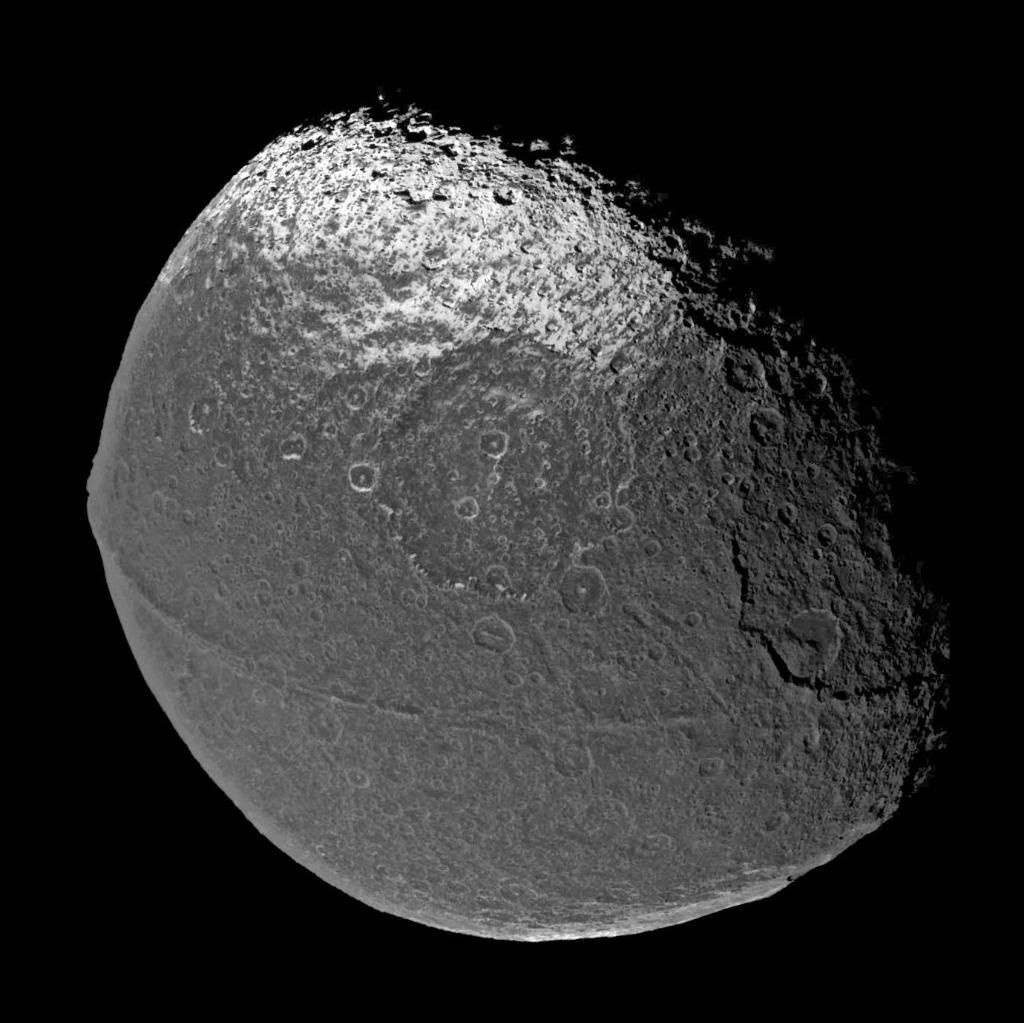
Iapetus is tidally locked to Saturn, as the Moon is to Earth.

Saturday, July 31, 2010

Something to Take Into Account for Far-Future Science Fiction: Earth's Slowing Rotation

Via Boing Boing, I saw this awesome article about what would happen if the Earth's rotation stopped. I don't mean all of a sudden like H.G. Wells once asked, i.e. everyone suddenly flying to the east at about 500 mph x the cosine of your latitude. I would link to the story but couldn't find it. But who cares, because here's the cool map:


I think you should take the color-coding as elevation only; there are good reasons to believe the middle of the landmass would have no green at all (keep reading.)

In essence, the maps reflect that without angular momentum, the ocean water would flow to the poles; right now it's 8 km deeper at the equator because of centripetal acceleration. But this isn't completely a thought experiment, because the Earth's rotation is slowing down, as a result of tidal forces (pay attention the next few New Years Eves and you'll notice at least one leap-second added.) In fact during the Devonian, there were about 400 days per year, which we know from fossil corals. The rate of the Earth's rotation will have fallen to roughly half its present value by the time the Sun goes red giant, although it probably will become tide-locked for a geologically brief period while the parent star expands. But nothing could survive on the liquefying cinder that will be Earth at that point, so we don't have to worry so much about that.

(If you really want to stop the rotation of the Earth like I personally tried to stop the San Andreas fault, we could all of us in the world fly to Belem, BR and then on the count of three start running due east to zero-out the Earth's angular momentum. Wouldn't work. In fact it wouldn't work even if all biomass in the world came along with us, because we'd have to go faster than the speed of light to do it. Besides not knowing exactly how the trees and plankton of the world will join us in our little escapade, by going around the world faster than the speed of light you risk going back in time like Superman as noted previously. Also of relevance, you can't. But I hear Belem is still nice for an Amazon port city.)

So besides the obvious map changes wrought by stopping our rotation, what else would happen? First and most obviously, a major climate shift. The oceans would be colder, because they're both at higher latitudes and deeper than our current oceans. This would considerably cool the overall climate of the Earth. If just the opening of Drake's passage was enough to put us into a sequence of glacial pulses, I would bet restricting all the world's water to the polar regions would put us into a very long-term snowball Earth phase. The land mass would be one continuous equator-girdling supercontinent with very little moderation by the oceans in the center (more on this later).

Of course as noted above we won't see the full effects of stopping the Earth's rotation but prior to the red giant age, there will still be some slowing. But then again the continents will have moved in the interim. Here's New Pangea, a mere 250 million years from now, 5% of the way to the red giant age (if you went back that far, you'd be at the start of the dinosaur age):


So for any future maps of the Earth that you smart geocomputer people make, don't just look at plate tectonics guesstimations, also look at the distribution of ocean water assuming a decreased (but not zero) rotation rate. (While you're at it, I want to buy property on Loihi ahead of the rush, i.e. before it breaks the surface of the Pacific. Work hard to find me a nice spot and in return I shall give you a shiny penny!) But look closely at the map - if the Earth's rotation stops, Loihi would be almost right on the coast! Also of note is that the wreck of the WWII dreadnaught Yamato would in fact be exposed on dry land.

The continuous belt of land around the equator highlights a second probable difference (and problem) with the no-spin world. The tropics drive evolution; biological innovation typically spreads from low latitudes to high latitudes. This has been shown to be historically true by an analysis of the fossil record, and it's true even when you look at the rate of evolution in current tropical ecoregions. The way the world works today, the equatorial regions are very wet, because of moisture from the oceans and east-west currents that drive moisture inland. But with no rotation, what would the polar ocean currents be doing, if they exist at all? If there are no north-south currents, then the center of Equatoria will make the Atacama Desert look positively lush. Not only will evolution slow as a result of the disappeared tropics, there will be less opportunity for biodiversity to appear: now there is only one continent, and all its climate zones are continuous east-to-west. That means there are no climactic gene-flow barriers. This is bad because if there's a problem in one part of the continent - a blight on critical grasses, an animal virus, an eruption that further cools the temperature at that latitude - there are no refuges.

(Take a minute to look back at that map of Future Pangea - it's also interesting to think that right now on Earth, we're in an odd period where the continents are near the point of maximum isolation from each other; we may have just passed it a few million years ago, right before South America joined North America. Coincidence that the planet's first intelligence appeared out of this era?)

The equatorial areas that were once abyssal planes will be undergoing a nice post-oceanic rebound, like much of Canada still is after the weight of the glaciers disappeared. For Canada this means all those awesome lakes and waterfalls, but if my other guesses for the climate of Equatoria are right, there won't be any water at all, except near the coasts, and it will likely be frozen. Maybe there will be two isolated ecoregions - two coastal tundras, separated from the Mars-like Equatorial Dry Valleys of the interior.

This of course neglects the most devastating effect of tide-locking: the sun-facing side would be cooked, and the far-facing side would be frozen solid. Even assuming some heat exchange between the two sides and without even calculating the heat of the sun-facing side, chance are the atmosphere would expand and all the water would be in vapor phase, and a lot of it would be lost to space. Even if somehow that didn't happen, you're still looking at two narrow temperate bands around the dawn/dusk rim of the Earth, with one piece of land at the equator of both. (For a long-dead discussion of terrestrial tide-locking see here.)

Long story short: don't stop the Earth's rotation. Like crossing the streams, it would be bad.